MAP30 Article Directory
Return To Home Page →
Food, Sugar & Industry
Food, Sugar & Industry Articles
The modern metabolic health crisis didn't happen by accident. It was engineered.
Over the past 50 years, the food industry has systematically redesigned the human diet — replacing whole foods with ultra-processed products engineered to override the body's natural satiety signals, maximize consumption, and create habitual eating patterns. The science behind how this was done, and what it does to metabolism, is increasingly well-documented. What remains poorly communicated is how directly these products drive insulin resistance, chronic inflammation, and metabolic disease.
Sugar is a central part of the story — but not in the way most people think. It isn't just about calories or sweet taste. Fructose in particular is metabolized differently from glucose, bypassing normal appetite regulation and driving fat production in the liver in ways that directly contribute to non-alcoholic fatty liver disease, elevated triglycerides, and insulin resistance. The food industry's decades-long campaign to shift blame from sugar to fat — funded by the sugar industry and laundered through corrupted research — is one of the most consequential misinformation operations in public health history.
Ultra-processed foods compound the problem. They are designed to be calorie-dense, nutrient-poor, and metabolically disruptive. They degrade gut microbiome diversity, spike insulin disproportionately to their caloric content, and trigger inflammatory responses. They are not simply unhealthy food. They are industrially manufactured products that interact with human metabolism in ways their manufacturers have studied, understood, and deliberately optimized for profit.
The articles in this section examine the food industry's role in the metabolic health crisis — the science, the litigation, the documented deception, and what it means for anyone trying to understand why eating less and moving more hasn't worked.

Grass-Fed Beef vs B12 Supplements: Why 92% of Vegans Are Deficient (Bioavailability Explained)
Why the “second-hand B12” argument falls apart when you look at deficiency rates, evolutionary biology, and what actually happens in a cow’s rumen.

San Francisco Takes Aim: Landmark Lawsuit Against Ultra Processed Food Giants
A first-of-its-kind lawsuit filed on behalf of the People of California accuses the country's largest food companies of knowingly engineering addiction, deceiving consumers, and targeting children — using the exact same playbook as Big Tobacco. Here's what the court filings actually reveal.

Is High Fructose Corn Syrup Bad for You? What Soda Does to Your Liver
The bigger question is not how many calories are in a soda. It is whether high fructose corn syrup is bad for you — and what repeated fructose exposure does inside the liver. Soda delivers a fast, concentrated fructose load that can increase liver fat, raise triglycerides, and worsen insulin resistance over time.
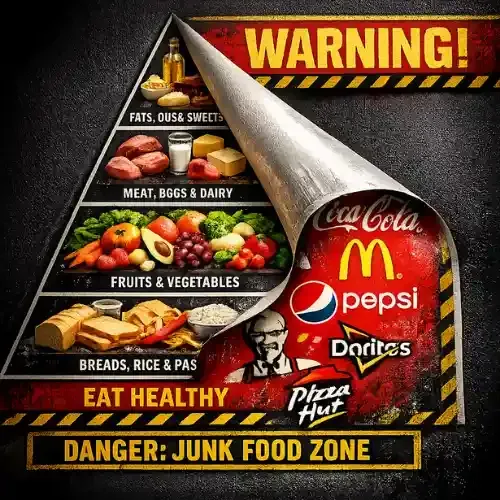
The Food Pyramid Was Wrong — and How Contested Science and Industry Shaped It
For three decades, Americans were told to eat 6 to 11 servings of grains per day and avoid fat at all costs. The science behind that advice was always more complicated than the pyramid suggested — and the story of how a hypothesis became federal policy is one of the most consequential chapters in modern nutrition history. To understand why the Food Pyramid was wrong, you have to look at both the science debate behind it and the commercial pressures that helped turn that debate into federal policy.

Why Is Sugar So Addictive — The Neuroscience Behind the Craving
Sugar addiction is not a character flaw or a lack of willpower. It is a neurochemical process — one the food industry spent decades studying, engineering, and exploiting. Here's what's actually happening in your brain, and why stopping is harder than anyone told you.

Ultra-Processed Food vs Real Food — The Science the Industry Spent Decades Hiding
Ultra-processed food is not simply unhealthy food. It is an industrially manufactured product engineered to override hunger, defeat satiety, and drive compulsive consumption — and the science behind how it works has been known inside the industry for decades.

Why Are Seed Oils Bad — What They Actually Do to Your Body
Seed oils are in almost everything processed food contains. They are marketed as heart-healthy vegetable oils. They are a product of industrial chemistry that has been in the human food supply for barely a hundred years. Here is what the research actually shows about what they are and what they do.

How the Sugar Industry Paid Harvard to Blame Fat for Heart Disease
In 1967, the New England Journal of Medicine published a landmark review concluding that fat and cholesterol caused heart disease — and that sugar was not the problem. Internal documents revealed fifty years later that the sugar industry secretly paid the scientists who wrote it.
Start Here: Understanding Metabolic Health
Metabolic health affects far more than body weight. It influences energy levels, hunger, brain function, inflammation, and long-term disease risk.
Many people focus only on calories or exercise, but the deeper drivers of metabolic health lie in hormonal signaling, insulin sensitivity, and cellular energy production.
If you're new to these topics, start by exploring the core articles in this library to build a clear understanding of how metabolism works and why restoring metabolic balance is key to long-term health.

📩 Join the Metabolic Health Newsletter
New articles, research insights, and metabolic health strategies delivered directly to your inbox.