2 February, 2026
Edition: Food, Sugart & Industry
Vol 1, Edition 1
Why Grass-Fed Beef Is Better — The Nutritional Difference Is Bigger Than You Think
Not all beef is the same food. The difference between a feedlot animal and a pasture-raised one goes far deeper than a label — it changes the fat profile, the nutrient density, and the B12 your body actually receives. Here is what the research shows and why it matters for metabolic health.
Published By: MAP30 Challenge
Authored By: John Shaw
When I started rebuilding my diet around whole foods and eliminating the processed products, loaded with sugar that had driven my metabolic dysfunction, I made an assumption most people make: beef is beef. It's a protein source. Pick the leanest cut and move on. It took me a while to understand that the animal's diet determines the nutrient profile of the meat — and that a grass-fed animal raised on diverse pasture is producing a fundamentally different food than a feedlot animal eating corn and soy in a confined lot. Once I understood that distinction, it changed how I shopped and how I thought about animal protein entirely.
This article is not an argument against plant-based diets or the people who choose them. There are legitimate reasons people make that choice — ethical, environmental, cultural — and I respect all of them. What I do push back on is the nutritional equivalence claim: the idea that a B12 supplement does the same job as the whole food. The data does not support that claim. And the comparison is almost always made using the wrong kind of beef.
Grass-Fed vs Grain-Fed — What the Label Actually Means
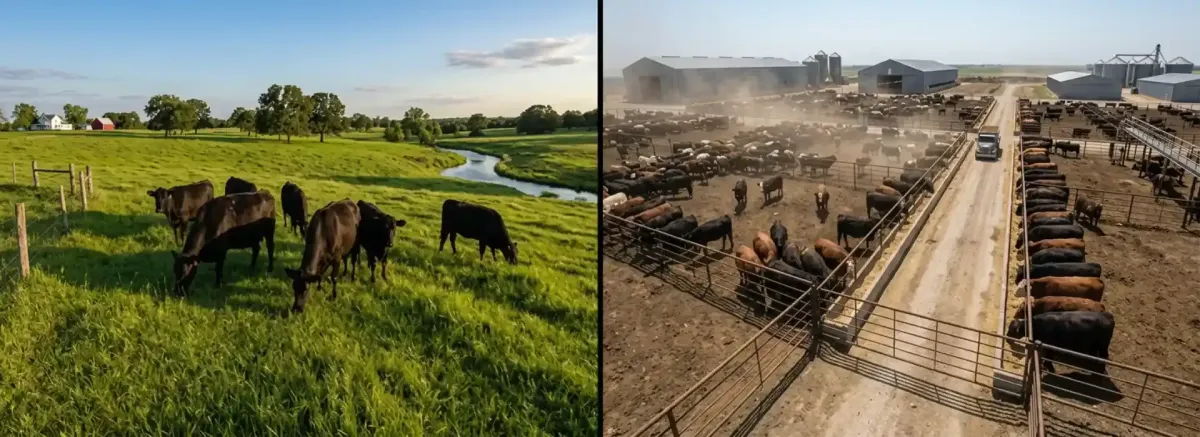
Most people assume grass-fed is a premium marketing label on essentially the same product — like organic or artisan, words that signal quality without necessarily delivering it. The reality is more substantial. Feedlot and pasture-raised cattle are eating different foods, living in different conditions, and producing different nutritional profiles in their meat. The comparison is less like two tiers of the same product and more like two different foods that happen to share a category name.
Understanding the difference starts with what the animal actually eats — and how that diet flows through to the nutrient composition of the meat on your plate.
| Feedlot / Grain-Fed | Grass-Fed / Pasture-Raised | |
|---|---|---|
| Diet | Corn, soy, GMO grain — not the animal's natural diet | Diverse grasses, legumes, herbs, wildflowers |
| Living conditions | Confined dirt lots, high stress, minimal movement | Hundreds to thousands of acres of open pasture |
| Cobalt access | Depleted feedlot soil — synthetic cobalt added to feed | Biodiverse pasture soil with natural cobalt content |
| B12 source | Primarily synthetic supplementation | Natural rumen synthesis from pasture cobalt |
| Omega-6:3 ratio | ~7:1 — pro-inflammatory fat profile | ~2:1 — similar to wild-caught fish |
| Nutrient density | Lower CLA, K2, beta-carotene, antioxidants | Higher CLA, K2, beta-carotene, antioxidants |
The feedlot model is built for efficiency and speed, not nutritional density. Corn and soy accelerate weight gain but produce a fat profile that looks nothing like what ruminant animals eating their natural diet produce. The dietary guidance that steered Americans away from traditional animal fats and toward grain-heavy, processed alternatives was itself shaped by contested science and industry influence — a history that directly enabled the industrialization of beef production. When the plant-based argument dismisses beef as nutritionally equivalent to a supplement, it is almost always referencing feedlot animals — animals that are themselves being synthetically supplemented. That is a very different comparison than grass-fed, pasture-raised beef from animals doing what ruminants evolved to do.
"The cow is not just a middleman. It is a necessary intermediary — doing biochemical work that the human body literally cannot do on its own."
The Fat Profile — Why the Omega-6 to Omega-3 Ratio Changes Everything
One of the most significant nutritional differences between feedlot and grass-fed beef has nothing to do with B12. It is the fat profile — specifically the ratio of omega-6 to omega-3 fatty acids in the meat.
Grain feeding pushes cattle's fat composition toward omega-6 dominance. Feedlot beef has an omega-6 to omega-3 ratio of approximately 7:1. Grass-fed beef from pasture-raised animals eating diverse forage typically sits closer to 2:1 — comparable to wild-caught salmon. I can assure you, that distinction matters enormously in the context of everything else the MAP30 framework addresses.
7:1 vs 2:1
Omega-6 to omega-3 ratio in feedlot beef versus grass-fed beef. Grass-fed is comparable to wild-caught fish.
Daley CA et al. — Nutrition Journal, 2010
As covered in the Seed Oils article in this library, the modern Western diet already delivers an omega-6 load of 15:1 to 25:1 through processed food and seed oil consumption. The same processed food supply that elevated omega-6 exposure also introduced high-fructose corn syrup at industrial scale — an ingredient whose liver metabolism drives the insulin resistance that makes the inflammatory fat profile of feedlot beef even more damaging. gram of animal fat you eat either compounds that imbalance or corrects it. Grass-fed beef — with its 2:1 ratio — works with the MAP30 framework's goal of reducing chronic inflammation. Feedlot beef, at 7:1, adds to the problem the framework is trying to solve.
A comprehensive review of fatty acid profiles in grass-fed versus grain-fed beef found that grass feeding significantly increases total omega-3 content, improves the omega-6 to omega-3 ratio, and raises concentrations of conjugated linoleic acid — all associated with reduced cardiovascular and inflammatory disease risk.
(Daley CA et al. — Nutrition Journal, 2010)
Vitamin B12 — Why the Form and Source Actually Matter

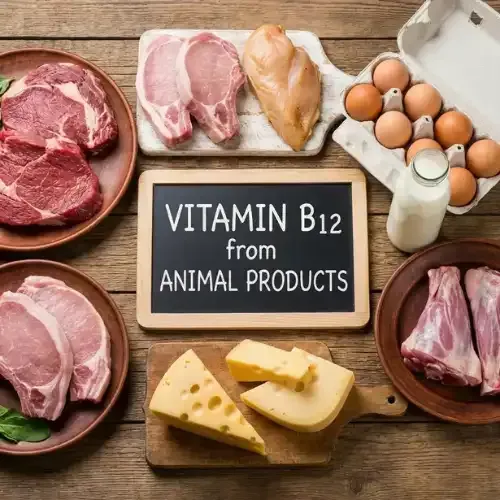
I want to be clear about something the plant-based argument gets right before I explain where it goes wrong. The core biology is accurate: cows do not synthesize B12. Bacteria in the rumen — the cow's specialized fermentation chamber — convert cobalt from soil and grass into bioavailable B12. Humans also produce B12 from gut bacteria, but the production happens in the colon, too far down the digestive tract to be absorbed into the bloodstream. We make B12 in the wrong place to use it. So we must get it from an outside source.
The plant-based argument uses this fact to claim equivalence: if the cow is just a middleman converting bacterial B12, why not skip the middleman and take a supplement made from the same bacteria in a controlled lab environment? The argument sounds logical. The problem is that it describes the cow as an inefficiency rather than a necessity. A more accurate description is that the cow's rumen is performing a conversion that human digestive anatomy cannot perform. We cannot skip the solar panel and plug directly into the sun. The solar panel — the rumen — is the necessary step between the raw input and the usable energy.
When you eat grass-fed beef, you are getting B12 in two forms that your body recognizes and uses immediately:
1. Methylcobalamin — the active form used directly for nerve function, DNA synthesis, and brain health
2. Adenosylcobalamin — the active form used directly for energy production in mitochondria
3. The food matrix — heme iron, zinc, selenium, taurine, and intrinsic factor binding sites that collectively optimize B12 absorption
Most B12 supplements use cyanocobalamin — a synthetic form the liver must convert into the active forms before the body can use it. That conversion requires adequate liver function, uses up glutathione (the body's primary antioxidant), and produces a small cyanide byproduct the body must detoxify. Better supplements use methylcobalamin or adenosylcobalamin, but even those deliver an isolated molecule with none of the cofactors that optimize absorption in whole food.
The practical result: absorption rate from a B12 supplement is approximately 50% lower than from beef. Think about what that difference looks like in real terms. Here is how I explain it. Think of someone walking into a five-star restaurant and someone salvaging a plate from a dumpster behind that restaurant. They are both getting food. Both have nutrients in that food. But the difference in quality, bioavailability, and what the body actually receives is night and day. That gap is what 50% lower absorption means in practice.
86% of vegans are B12 deficient
Omega-6 to omega-3 ratio in feedlot beef versus grass-fed beef. Grass-fed is comparable to wild-caught fish.
Daley CA et al. — Nutrition Journal, 2010
A systematic review examining B12 status across dietary patterns found that the majority of vegans and many vegetarians are B12 deficient, with deficiency rates significantly higher than omnivores even when supplements were available — primarily due to bioavailability differences and compliance gaps. (Pawlak R et al. — Nutrition Reviews, 2013)
The deficiency gap is not primarily a compliance problem. It is a bioavailability problem. A diet that requires daily pharmaceutical intervention — with precise dosing, correct form selection, and consistent adherence — to prevent irreversible neurological damage is not nutritionally equivalent to a diet that delivers the same nutrient passively through whole food. Human beings survived for millions of years without ever knowing what B12 was. They did so because they were eating animals. B12 supplements have existed for less than a hundred years. The evolutionary track record of one approach versus the other is not comparable.
What Else Is in Grass-Fed Beef — The Nutrient Profile Beyond B12
B12 is the most discussed nutrient in the grass-fed beef conversation, but it is far from the only reason grass-fed beef earns its place in a metabolic health framework. The full nutrient profile of pasture-raised beef reflects the diverse diet of an animal eating what ruminants evolved to eat.
1. Conjugated linoleic acid (CLA) — found in significantly higher concentrations in grass-fed beef, CLA is associated with reduced body fat, improved insulin sensitivity, and anti-inflammatory effects. Grain feeding dramatically reduces CLA content.
2. Vitamin K2 (MK-4) — produced when ruminants consume green chlorophyll-rich grasses. K2 is essential for directing calcium into bones rather than arterial walls. It is essentially absent in feedlot beef from grain-fed animals.
3. Beta-carotene — grass-fed beef contains higher levels of beta-carotene — the precursor to vitamin A — giving the fat its characteristic yellow tint. Feedlot beef fat is white because the grain diet eliminates it.
4. Zinc and selenium — both critical for immune function, thyroid health, and antioxidant defense. Higher bioavailability in whole food form than in supplemental equivalents.
5. Taurine — an amino acid critical for bile acid production, heart muscle function, and neurological health. Present in beef in forms the body uses directly.
6. Heme iron — the most bioavailable form of iron, found only in animal products. Enhances absorption of non-heme iron from other foods consumed in the same meal.
7. Complete protein — all nine essential amino acids in the proportions the body requires for muscle protein synthesis, tissue repair, and metabolic function.
No supplement stack replicates this profile. You would need separate products for B12, K2, CLA, heme iron, zinc, selenium, taurine, and complete protein — each with its own bioavailability limitation, compliance requirement, and interaction effect. Or you could eat a grass-fed steak.
How to Actually Buy It — What the Labels Don't Tell You
The label distinction matters more than most people realize — and the marketing around grass-fed beef has become complicated enough that knowing what you are actually buying requires reading carefully.
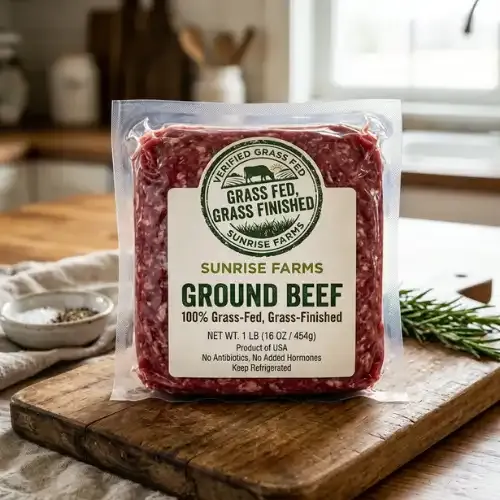
Here is what to look for:
Grass-fed AND grass-finished — this is the standard that matters. 'Grass-fed' alone only means the animal received grass at some point. Grass-finished means it ate grass its entire life, including the finishing period before slaughter. Many 'grass-fed' animals are grain-finished, which shifts the fat profile back toward the feedlot pattern.
Pasture-raised — confirms the animal had meaningful outdoor access and roaming space, not just a technical grass-feeding protocol in a confined setting.
Regenerative or certified organic — signals that the pasture soil is being managed for health and mineral content, including cobalt. The soil quality determines the cobalt available to the rumen bacteria that produce B12.
Country of origin — domestic grass-fed standards vary; New Zealand and Australian grass-fed beef are often cited for consistently high standards due to year-round pasture grazing.
No supplement stack replicates this profile. You would need separate products for B12, K2, CLA, heme iron, zinc, selenium, taurine, and complete protein — each with its own bioavailability limitation, compliance requirement, and interaction effect. Or you could eat a grass-fed steak.
This article is part of our Food, Sugar & Industry series. Food, Sugar & Industry

John Shaw
MAP30 Challenge
John Shaw is a certified Nutrition Educator and the founder and CEO of the MAP30 Challenge, a revolutionary 30-day health transformation program born from his own struggle with obesity and pre-diabetes. At 294 pounds and on seven medications, John discovered the power of eliminating sugar and addressing metabolic dysfunction at its root.

FAQ's
1. Why is grass-fed beef better than grain-fed?
2:1 omega-6:omega-3 ratio versus 7:1 in grain-fed. Higher CLA, K2, beta-carotene, antioxidants. B12 from natural rumen synthesis. The fat and nutrient profile reflects an animal eating its natural diet.
2. Why is B12 from grass-fed beef better than supplements?
Active forms directly used by the body versus cyanocobalamin requiring liver conversion. Absorption approximately 50% higher than oral supplements. The 86% vs 11% deficiency data reflects this gap in real-world outcomes.
3. What does grass-fed and grass-finished mean?
Grass-fed alone only means the animal received grass at some point. Grass-finished means entire life on grass. Many grass-fed cattle are grain-finished — which shifts the fat profile back. Look for both words.
4. Is grass-fed beef worth the price?
For metabolic health yes. The omega-6 difference matters when the modern diet already delivers 15:1-25:1 from seed oils. K2, CLA, and natural B12 are not replicated in conventional beef.
5. What nutrients are in grass-fed beef beyond B12?
CLA, K2, beta-carotene, zinc, selenium, taurine, heme iron, complete protein. All in bioavailable whole-food form.
6. What are the benefits of grass-fed beef liver?
Most concentrated dietary B12 source — 10x daily requirement in a 3oz serving. Also exceptionally high in vitamin A, folate, iron, copper, zinc, CoQ10. Arguably the most nutrient-dense whole food in a metabolic health framework.

Let Me See The Ai Audit Report
I had the MAP30 course material audited and graded by 4 dirrerent Ai models. I was shocked by the grade. See what they had to say about the MAP30 course.

Jaabsha Marketing LLC | All rights reserved 2024 Terms Of Service