8 April, 2026
Edition: Fasting & Metabolic Reset
Vol 2, Edition 1
Water Fasting — What Happens to Your Body When You Stop Eating Entirely
Most people have fasted for 16 hours and called it intermittent fasting. Water fasting is a different thing entirely. When there is no caloric load at all, the digestive system shuts down and the body enters a metabolic state most people have never experienced. Here's what actually happens — and what to expect if you try it.

Published By: MAP30 Challenge | Authored By: John Shaw
Article Directory: https://map30challenge.com/article-directory
Intermittent fasting gives the body a break from eating. Water fasting removes the question entirely. No meals, no calories, no decisions about what to eat. Just water — and time. For most people, the idea sounds extreme. But the biology of water fasting is not extreme. It is the metabolic state the human body was built to enter, evolved over hundreds of thousands of years of cycles between eating and not eating. The discomfort of the first day or two is real. What follows it is something most people have never experienced in their adult lives.
This article is not about whether you should do a water fast. It is about what actually happens when you do — what the body goes through hour by hour, day by day, and why the experience follows a predictable pattern once you understand the biology driving it.
"The hunger you feel on day one of a water fast is not your body telling you it needs food. It is your body asking a question it has been asking at the same time every day for years. Once you stop answering it, the question stops being asked."
What Water Fasting Actually Is — And What Separates It From Other Fasting Protocols
Water fasting means consuming nothing that carries a caloric load. That is the entire definition. No food, no juice, no protein shakes, no supplements with calories. Nothing that triggers an insulin response. The digestive system, which normally operates continuously, is given a complete rest.
This is different from intermittent fasting in a fundamental way. Intermittent fasting — whether 16:8, 18:6, or any other time-restricted eating protocol — compresses the eating window. The digestive system still activates daily. It still processes food. It still triggers the hormonal cascade that follows eating. Water fasting removes that activation entirely. The metabolic changes that begin after 16 to 18 hours of intermittent fasting continue and deepen in water fasting because there is no meal to interrupt them.
It is also different from juice fasting or broth fasting. Both of those deliver calories — meaning they trigger metabolic responses, including insulin. A glass of fresh juice contains enough fructose to produce a measurable insulin response and interrupt the fat-burning, cellular-cleanup state that water fasting produces. Water fasting is specific: nothing that the body has to metabolize for energy enters the system. That specificity is what makes the metabolic effects distinct.
What You Can Drink on a Water Fast — And Why These Don't Break It
The rule is simple: nothing that triggers an insulin response. Water is the baseline. Still or sparkling, plain or with a slice of lemon — the trace calories in a slice of lemon are negligible and do not produce a meaningful insulin response. Lemon water is acceptable.
Black coffee is acceptable. Coffee contains no calories and does not trigger insulin. It does stimulate cortisol and adrenaline, which can temporarily suppress hunger — which is why many people find the first morning of a water fast easier with black coffee than without it. No cream, no sweetener, nothing added. Black only.
Plain unsweetened tea — green, black, herbal — is acceptable for the same reason. No calories, no insulin response. The polyphenols in green tea may actually support the cellular autophagy process that extended fasting triggers. Sweetened tea of any kind breaks the fast.
Electrolytes deserve specific attention for any fast beyond 24 hours. As the body depletes glycogen — the liver and muscle glucose stores — water is released along with it, and with that water go electrolytes: sodium, potassium, and magnesium primarily. By day two or three of a water fast, electrolyte depletion becomes the primary source of the headaches, fatigue, and muscle cramping that people attribute to hunger. A pinch of sea salt in water, or a plain electrolyte supplement with no added sugar or calories, addresses this directly. This is not breaking the fast — it is making the fast physiologically sustainable.
What Happens to Your Body During a Water Fast — The Stage by Stage Breakdown
The body's response to a water fast follows a predictable sequence. Understanding that sequence is the difference between white-knuckling through it and recognizing each phase for what it is.
What Your Body Is Doing During a Water Fast — Phase by Phase
What Your Body Is Doing During a Water Fast — Phase by Phase
The discomfort of the first two days is real — but temporary. What follows is the reason experienced fasters keep coming back.
Hours
0 – 12
Transition — Glycogen Depletion Begins
The body is still burning glucose from the last meal. Liver glycogen — roughly 100g — begins depleting. Blood glucose falls gradually. Insulin falls with it. This phase feels identical to the end of a normal intermittent fasting window.
✅ Familiar territory — the metabolic shift has not yet begun
Hours
12 – 36
The Metabolic Switch — Ketosis Begins
Liver glycogen is depleted. Insulin falls to basal levels. Glucagon rises. The liver begins converting stored fatty acids into ketones. Hunger arrives in waves — felt urgently, but passing within 15 to 20 minutes with water or black coffee. This is the hardest psychological window.
⚠️ Hunger peaks here — it is a habit signal, not an emergency
Days
2 – 3
Adaptation — The Body Protests
Cells are upregulating the enzymatic machinery for fat oxidation. Energy can feel low, mental clarity foggy, the body resistant. Electrolyte depletion — from glycogen water loss — causes most of the headaches and fatigue. Salt and magnesium in water resolves this quickly. The discomfort is temporary.
🔴 Hardest physical phase — electrolytes are essential here
Days
3 – 4
The Shift — Ketones Reach the Brain
Ketone production is now substantial. The brain shifts to running primarily on ketones — crossing the blood-brain barrier without insulin, providing stable clean fuel. Hunger largely disappears. Energy stabilizes. Mental clarity becomes notable. Sleep quality improves significantly as blood sugar stops fluctuating overnight.
✅ The experience most people didn't expect — this is why fasters return
Days
4 – 7+
The Extended State — Autophagy and Deep Metabolic Reset
The body is running efficiently on stored fat. Autophagy — cellular cleanup removing damaged proteins and organelles — is operating at its highest level. Growth hormone rises, protecting lean tissue. The gut is resting and restoring. Visceral fat is mobilizing faster than subcutaneous fat. The metabolic environment is the cleanest it has been in years.
✅ Deep metabolic reset — autophagy, visceral fat reduction, insulin sensitivity restoration
The first 12 to 18 hours are the transition. The body is still burning glucose from the last meal. Glycogen stores in the liver — roughly 100 grams — begin depleting. Blood glucose falls gradually. Insulin falls with it. This is the phase most people recognize from intermittent fasting — nothing dramatic, the body is simply burning through what it stored.
Hours 18 to 36 are where the body crosses the line. Liver glycogen is now depleted or nearly so. Insulin has fallen to its lowest basal level. Glucagon rises. The liver begins converting stored fatty acids into ketones. The metabolic switch — from glucose burning to fat burning — is fully engaged. This is also when hunger peaks for most people, and the experience is counterintuitive: the hunger comes in waves rather than building continuously. When I experienced this “hunger sensation,” I would ignore it. I would continue to drink water or tea, and it would pass — often within 15 to 20 minutes. Drinking water, black coffee, or unsweetened tea during a hunger wave almost always resolves it. At least it did for me.
Here's a useful way to think about it. The body has been trained to expect food at certain times — the same way a dog waits by the bowl at 6pm. The hunger signal at that time is not a genuine emergency. It is a habit signal. The digestive system firing on schedule, asking the question it always asks. Once the schedule is broken for two or three days, the signal quiets. What felt like biological need turns out to be largely a biological routine.
Days 2 to 3 are the hardest for most people — not because the body is failing, but because it is adapting. The transition to ketone-based metabolism takes time. Cells that have been running on glucose for years need to upregulate the enzymatic machinery for fat oxidation. During this window, energy can feel low, mental clarity can be foggy, and the body may seem to protest. This is temporary. It is the same adaptation discomfort that appears during the first week of any low-carbohydrate dietary change.
Days 3 to 4 mark the shift that experienced fasters describe as the reason they fast. Ketone production is now substantial. The brain — which cannot store energy and requires a continuous fuel supply — has shifted to running primarily on ketones.

Unlike glucose, ketones cross the blood-brain barrier without insulin. The brain's energy supply becomes stable, clean, and consistent in a way it has not been since childhood for most adults eating a standard Western diet. Hunger largely disappears. Energy stabilizes. Mental clarity becomes notable.
I completed a 7-day water fast and the shift around day 4 was unmistakable. I slept nine hours and woke up feeling like I hadn't felt in decades — no grogginess, no reaching for coffee just to function, no mid-morning crash creeping in by 10am. Super energized, focused, clear-headed. What I realized afterward is that I had simply forgotten what it felt like to wake up with a fully rested brain running on clean fuel. Most of us have.
Days 4 through 7 and beyond are the extended state. The body is running efficiently on stored fat. Autophagy — the cellular cleanup process in which the body breaks down and recycles damaged cellular components — is operating at its highest level. Growth hormone rises significantly during extended fasting, protecting lean tissue and supporting cellular repair. The digestive system, relieved of its normal workload, is resting and restoring.
Water Fasting Benefits — What the Research Shows
The benefits of extended water fasting are not anecdotal. They map directly onto the metabolic changes the biology predicts, and several are documented in peer-reviewed research.
Autophagy — the process by which cells break down and recycle damaged proteins, mitochondria, and other cellular components — was the subject of the 2016 Nobel Prize in Physiology or Medicine, awarded to Yoshinori Ohsumi for his foundational work on the mechanisms of autophagy. Extended fasting is one of the most potent known activators of autophagy in humans. The cellular cleanup that occurs during a multi-day fast removes the accumulated cellular debris that contributes to aging, inflammation, and metabolic dysfunction. (Ohsumi Y — Nobel Lecture, 2016)
Insulin sensitivity improves significantly during and after extended fasting. The sustained low-insulin state forces cells to restore their sensitivity to insulin's signal — the same mechanism that makes intermittent fasting effective, amplified by duration. Multiple studies on multi-day fasting protocols show meaningful improvements in fasting insulin and HOMA-IR scores following extended fasts, particularly in individuals with baseline insulin resistance.
Visceral fat reduction occurs preferentially during water fasting because visceral fat — the metabolically active fat surrounding the organs — has the highest lipolytic rate of any fat depot. When glucagon is elevated and insulin is low, visceral fat mobilizes faster than subcutaneous fat. The portal vein delivery of free fatty acids and inflammatory cytokines to the liver decreases as visceral fat shrinks — which is part of why the post-fast period often shows improvements in liver enzymes, triglycerides, and blood pressure.
The gut gets a reset that no dietary approach can replicate. The digestive system is entirely dormant during a water fast. The gut lining — which normally operates under continuous mechanical and chemical stress — has an opportunity to repair. Research on fasting and gut microbiome diversity consistently shows improvements in microbial balance following extended fasting periods, with reductions in inflammatory bacterial species and increases in short-chain fatty acid producers.
Mental clarity and cognitive function improve for the reasons already described: the brain shifts to ketone metabolism, eliminating the glucose variability that produces the familiar fog-crash-craving cycle. Many people who complete their first multi-day fast describe it as the clearest thinking they have experienced in years. This is not placebo. It is the predictable result of a brain running on a cleaner, more consistent fuel source.
Is Water Fasting Safe — What You Need to Know Before You Start
For healthy adults, water fasting is safe. It has been practiced across virtually every human culture throughout history and is supported by a growing body of clinical research. The blanket claim that it is dangerous and should never be attempted without medical supervision is an overcorrection that has more to do with institutional caution than with the actual evidence. That said, there are genuine contraindications and genuine risks that require honest acknowledgment.
Water fasting is not appropriate for:
People with type 1 diabetes — fasting dramatically affects blood glucose and insulin requirements in ways that require medical management
People on medications that must be taken with food or that affect blood sugar — consult your physician before attempting any extended fast
People who are pregnant or breastfeeding
People with a history of eating disorders — extended food restriction can be psychologically harmful in this context
People with kidney disease, liver disease, or cardiac arrhythmias — the electrolyte shifts of extended fasting require medical oversight in these conditions
For everyone else, the primary risk of a water fast beyond 24 hours is electrolyte depletion — specifically sodium, potassium, and magnesium. This is manageable and predictable. A pinch of quality sea salt in water daily, and a plain magnesium supplement if the fast extends beyond 48 hours, addresses the physiological need without breaking the fast.
The other signals worth monitoring are dizziness on standing, heart palpitations, and severe muscle cramping. These are electrolyte signs, not hunger signs, and they resolve quickly with salt and water. If they persist after electrolyte correction, that is a signal to break the fast and eat.
For a first water fast, 24 hours is a reasonable starting point. It is long enough to experience the metabolic shift and meaningful enough to produce measurable results. From there, 48 and 72-hour fasts follow naturally as the body becomes adapted.
How to Break a Water Fast — The Step That Most People Get Wrong
How you end a water fast matters as much as how you conduct it. The digestive system has been dormant — in a multi-day fast, the gut lining has been resting, digestive enzyme production has slowed, and the stomach has contracted. Reintroducing food as if nothing happened is a reliable way to produce significant discomfort and in extended fasts, a serious risk of refeeding syndrome.
The sequence matters. Bone broth is the traditional and physiologically sensible first food — it provides sodium, collagen, and easily absorbed nutrients without requiring significant digestive work. It wakes the gut gently. A cup of bone broth two to three hours after ending the fast, then nothing else for a few hours, allows the digestive system to remember what it does.
From bone broth, the transition is to soft, easily digestible whole foods — cooked vegetables, a small amount of fruit, yogurt or eggs. Not a full meal. A portion. The stomach is smaller than it was before the fast and the digestive system needs progressive reloading. The first full normal meal — eggs, vegetables, quality protein — typically comes 24 hours after breaking the fast for multi-day fasts of 5 days or more.

What to avoid immediately after breaking a fast: raw vegetables, large portions, high-sugar foods, alcohol, processed food of any kind. The gut is in a particularly absorbent and sensitive state in the hours after refeeding begins. What goes in during that window hits harder than it normally would.
The refeeding phase is not an afterthought. It is part of the fast. Done correctly, the transition back to eating preserves the metabolic gains of the fast and sets the body up to maintain the improved insulin sensitivity, gut diversity, and cellular clarity that the fast produced. Done incorrectly, it erases much of the benefit within hours. Take the same patience with ending the fast that you brought to starting it.
This article is part of our Fasting & Metabolic Reset series. Fasting & Metabolic Reset
Latest Articles

Diagnosed With Prediabetes. Now What?
Your fasting glucose came back at 99. Your doctor said everything looks fine. It isn't. Here's what that number actually means — and why the next few years are the most important.

Non-Alcoholic Fatty Liver Disease
You don't drink. You're not overweight. You eat reasonably well. And your doctor just told you that your liver is showing signs of fat accumulation. Here's what NAFLD actually is.
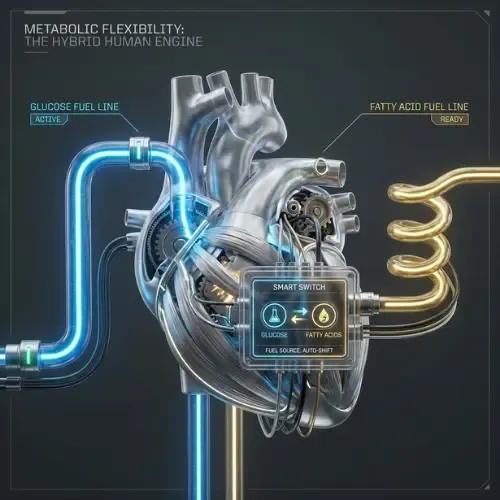
How to Improve Metabolic Flexibility
Metabolic flexibility is the ability to switch efficiently between burning glucose and burning fat depending on what fuel is available. Most people have lost it.

John Shaw
MAP30 Challenge
John Shaw is a Certified Nutrition Educator and the founder of the MAP30 Challenge. What began as a personal health journey at 294 pounds, and pre-diabetic, evolved into a structured 30-day metabolic reset program grounded in nutritional science. John's mission is simple: give people the biological education that the diet industry never did.

FAQ's
1. What is water fasting?
Water fasting means consuming nothing with a caloric load — no food, juice, protein shakes, or caloric supplements. Water, plain black coffee, and unsweetened tea are acceptable because they do not trigger an insulin response. The digestive system shuts down completely, and the body enters a metabolic state characterized by falling insulin, rising glucagon, ketone production, and cellular autophagy. It is distinct from intermittent fasting, which compresses the eating window but does not eliminate daily digestive activation.
2. How long should a water fast be?
For a first water fast, 24 hours is a sensible starting point — long enough to experience the metabolic shift and produce measurable results. From there, 48 and 72-hour fasts are common progressions. Multi-day fasts of 5 to 7 days produce the deepest autophagy activation and the most significant metabolic reset, but require electrolyte management and careful refeeding. The appropriate length depends on experience level, health status, and specific goals.
3. What can you drink during a water fast?
Water — still or sparkling, plain or with a slice of lemon. Black coffee — no cream, no sweetener. Plain unsweetened tea — green, black, or herbal. For fasts beyond 24 hours, electrolytes are essential: a pinch of sea salt in water and a plain magnesium supplement prevent the headaches, fatigue, and muscle cramping that come from electrolyte depletion as glycogen is depleted. Nothing sweetened, nothing with calories, nothing that triggers an insulin response.
4. What are the benefits of water fasting?
Autophagy activation — the cellular cleanup process that removes damaged proteins and organelles. Visceral fat reduction through sustained glucagon elevation and hormone-sensitive lipase activation. Insulin sensitivity restoration through the prolonged low-insulin state. Gut microbiome reset and gut lining repair from digestive rest. Mental clarity from ketone-based brain metabolism. Growth hormone elevation protecting lean tissue during the fast. These are not speculative — they are the documented metabolic responses to the physiological state extended fasting creates.
5. Is water fasting safe?
For healthy adults without contraindicated conditions, yes. The primary physiological risk beyond 24 hours is electrolyte depletion, which is manageable with salt and magnesium supplementation. Water fasting is not appropriate for people with type 1 diabetes, those on medications requiring food, pregnant or breastfeeding women, people with a history of eating disorders, or those with kidney, liver, or cardiac conditions. Dizziness on standing, heart palpitations, and severe cramping that persist after electrolyte correction are signals to break the fast.
6. How do you break a water fast?
With bone broth first — a cup two to three hours after ending the fast provides sodium, collagen, and easily absorbed nutrients without taxing the dormant digestive system. From there, soft easily digestible foods: cooked vegetables, a small amount of fruit, eggs. Not a full meal. The stomach has contracted and the digestive system needs progressive reloading. Avoid raw vegetables, large portions, sugar, alcohol, and processed food in the immediate refeeding period. For multi-day fasts, plan 24 hours of gradual refeeding before returning to normal eating.
Sources
Ohsumi Y — 'Autophagy: an intracellular recycling system' (Nobel Lecture, 2016) — https://www.nobelprize.org/prizes/medicine/2016/ohsumi/lecture/
Anton SD et al. — 'Flipping the Metabolic Switch: Understanding and Applying Health Benefits of Fasting' (Obesity, 2018) — https://pubmed.ncbi.nlm.nih.gov/29086496/
Longo VD, Mattson MP — 'Fasting: Molecular Mechanisms and Clinical Applications' (Cell Metabolism, 2014) — https://pubmed.ncbi.nlm.nih.gov/24440038/
Cahill GF — 'Fuel Metabolism in Starvation' (Annual Review of Nutrition, 2006) — https://pubmed.ncbi.nlm.nih.gov/16848698/
Mattson MP et al. — 'Intermittent metabolic switching, neuroplasticity and brain health' (Nature Reviews Neuroscience, 2018) — https://pubmed.ncbi.nlm.nih.gov/29321682/

Let Me See The Ai Audit Report
I had the MAP30 course material audited and graded by 4 dirrerent Ai models. I was shocked by the grade. See what they had to say about the MAP30 course.

Jaabsha Marketing LLC | All rights reserved 2024 Terms Of Service