7 April, 2026
Edition: Metabolic Disease
Vol 1, Edition 22
You Were Just Diagnosed With Prediabetes. Now What?
Your fasting glucose came back at 99. Your doctor said everything looks fine. It isn't. Here's what that number actually means — and why the next few years are the most important window you'll ever have.

Published By: MAP30 Challenge | Authored By: John Shaw
Article Directory: https://map30challenge.com/article-directory
The Prediabetes Warning Window: What Your Numbers Mean
The Prediabetes Warning Window: What Your Numbers Mean
Optimal
70–85 mg/dL
Fasting glucose is well-regulated. Insulin sensitivity is intact. Fat burning and energy balance operating normally.
✅ No action needed — maintain
Watch Zone
86–99 mg/dL
Still "normal" by clinical standards — but insulin resistance may already be developing. Fasting insulin worth testing now.
⚠️ Request fasting insulin test
Prediabetes
100–125 mg/dL
Clinical prediabetes threshold. Insulin resistance is established. Pancreatic compensation is beginning to fail. Window for reversal is wide open.
🔴 Act now — fully reversible
Type 2 Diabetes
126 mg/dL and above
Diagnostic threshold for type 2 diabetes. Beta cell function has declined significantly. Reversal is still possible — but harder, slower, and less complete than at the prediabetes stage. This is why the prediabetes window matters so much.
🔴 Medical evaluation required — reversal still possible with intervention
What Your Doctor Isn't Testing
Fasting glucose alone misses the full picture. Fasting insulin — which reveals how hard your pancreas is working to keep glucose normal — is not included in standard blood panels. Ask specifically for fasting insulin alongside your next glucose draw. The HOMA-IR score it produces tells you where you actually are on the insulin resistance spectrum — years before fasting glucose crosses 100.
You sit across from your doctor. The blood results are on the screen. Fasting glucose: 99 mg/dL. Just under the prediabetes threshold of 100. Your doctor glances at it, tells you everything looks normal, and moves on to the next item.
What your doctor didn't say — and possibly doesn't know to say — is that a fasting glucose of 99 is not the same as a fasting glucose of 75. It means your blood sugar regulation is already under strain. It means insulin resistance has likely been developing for years. It means you are, statistically, a few dietary decisions and a handful of years away from a prediabetes diagnosis that will trigger a very different conversation.
And it means you are in the most important window you will ever have — because prediabetes, unlike type 2 diabetes, is almost entirely reversible. Not managed. Not slowed. Reversed. The biology supports it. The research documents it. The window is open right now.
"Prediabetes is not a mild version of diabetes. It is the warning shot that most people miss — the last clear opportunity to change the trajectory before the trajectory changes you."
What Prediabetes Actually Is
Prediabetes is diagnosed when fasting blood glucose falls between 100 and 125 mg/dL, or when HbA1c — the three-month average blood sugar marker — falls between 5.7% and 6.4%. Here's how those thresholds break down:
Prediabetes
Fasting glucose 100–125 mg/dL | HbA1c 5.7–6.4%
Type 2 Diabetes
Fasting glucose 126+ mg/dL | HbA1c 6.5%+
Cross either of those upper thresholds and you have type 2 diabetes. The difference between prediabetes and type 2 is not dramatic — it's a number. But what that number represents biologically is significant.
Here is what those clinical thresholds don't tell you. By the time fasting glucose reaches 100, insulin resistance has typically been developing for a decade or more. The pancreas has been compensating — producing more and more insulin to keep blood sugar in the normal range — for years before that compensation starts to fail. The glucose number only rises when the pancreas can no longer keep up. The underlying problem is far older than the diagnosis.
Research consistently shows that insulin resistance — the root condition driving prediabetes — develops on average 10 to 15 years before a prediabetes diagnosis. The pancreatic beta cell dysfunction that eventually produces elevated fasting glucose begins years earlier still. (Tabák AG et al. — Lancet, 2012)
96 Million American Adults
have prediabetes — and 80% have no idea
CDC National Diabetes Statistics Report, 2024
The invisibility of prediabetes is its most dangerous feature. There are no symptoms that announce it. No pain, no obvious physical change, no alarm. Think of it like a slow leak in the roof — no flood, no alarm going off, just damage quietly accumulating in the walls while everything looks fine from the outside. The metabolic dysfunction builds the same way: silently, steadily, while fasting glucose creeps upward and remains technically normal by clinical standards. Most people discover they have prediabetes only when a blood test happens to catch the number in the flagged range. Many never discover it at all until type 2 diabetes is diagnosed.
The Signs That Show Up Before the Diagnosis
Prediabetes doesn't announce itself — but the body leaves signals for those who know what they're reading. Most people have normalized these symptoms for so long they've stopped noticing them. They feel like personality traits. They're not.
Fatigue after meals — particularly after carbohydrate-heavy foods, as cells struggle to process glucose efficientl
A reliable afternoon energy crash around 2 or 3pm that most people reach for coffee to get through
Persistent cravings for sugar and refined carbohydrates that feel like hunger but are driven by insulin dysregulation — not actual need
Weight accumulating specifically around the abdomen — visceral fat that is both a consequence of insulin resistance and an accelerant of it
Sleep that doesn't restore — blood sugar fluctuations overnight disrupt sleep architecture, leaving people tired despite adequate hours
Fasting glucose in the high-normal range between 90 and 99 mg/dL — not yet prediabetes but already a signal worth noting
Fasting triglycerides above 150 mg/dL and HDL below 50 in women or 40 in men — reliable proxy markers for insulin resistance
None of these individually confirms prediabetes. But several together — particularly alongside a dietary pattern heavy in refined carbohydrates — warrant a conversation with your physician about fasting insulin and HOMA-IR.
Why the Prediabetes Window Matters So Much
The reason prediabetes deserves a fundamentally different response than it typically receives is simple: it is the last point at which the underlying metabolic dysfunction is fully reversible through dietary and lifestyle intervention alone. Not just manageable — reversible. The pancreatic beta cells are still functional. Insulin resistance, while established, has not yet produced the degree of beta cell exhaustion that characterizes advanced type 2 diabetes.
Once type 2 diabetes is diagnosed, the conversation shifts. Beta cell function has declined. Blood glucose management becomes the focus. Medication enters the picture. The window for full reversal without pharmaceutical support narrows significantly.
This is not to say type 2 diabetes is irreversible — the research on dietary reversal of type 2 diabetes, particularly work by Dr. Roy Taylor at Newcastle University, shows that meaningful beta cell recovery is possible even after diagnosis in many patients. But the ease, speed, and completeness of reversal are all substantially greater at the prediabetes stage than after the type 2 threshold has been crossed.
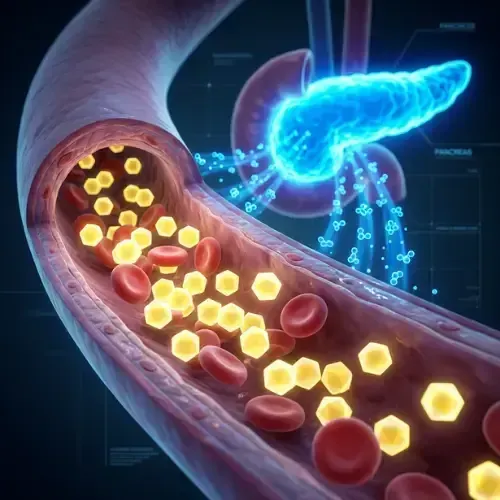
A landmark study in the New England Journal of Medicine — the Diabetes Prevention Program — found that intensive lifestyle intervention reduced the progression from prediabetes to type 2 diabetes by 58% over three years, outperforming metformin which reduced progression by 31%. Diet and lifestyle were more than twice as effective as the most commonly prescribed medication. (Diabetes Prevention Program Research Group — NEJM, 2002)
"The Diabetes Prevention Program didn't find that lifestyle change helps a little. It found that it works better than the drug. The window is real. The biology supports it. Most people just never get told."
What Actually Drives Prediabetes — The Mechanism
Prediabetes is not caused by eating too much in general. It is caused by a specific dietary pattern — one that keeps insulin chronically elevated until cells progressively stop responding to it. Understanding the mechanism explains why the intervention works.

Refined carbohydrates are the primary driver. When you eat refined carbohydrates — white bread, white rice, processed cereals, added sugars — they break down rapidly into glucose and enter the bloodstream quickly. Blood sugar spikes sharply. The pancreas releases a large bolus of insulin to manage it. Over time, with this pattern repeated three or more times a day, cells in the liver and skeletal muscle progressively downregulate their response to insulin's signal. Insulin resistance develops.
The pancreas compensates — until it can't. Think of it like a sump pump running constantly because the basement keeps flooding. It keeps the water level down, and from the outside everything looks fine. But the motor is running hot every hour of every day. Eventually it burns out. That's what's happening with the pancreas during the prediabetes years: it produces more and more insulin to keep blood glucose in the normal range, and the glucose number stays stable — right up until the compensatory capacity fails and the number starts to rise. By the time fasting glucose crosses 100, that pump has been running hard for years. HOMA-IR captures this — the rising insulin-to-glucose ratio — long before fasting glucose does.
Visceral fat amplifies the problem. As covered in the Visceral Fat article in this library, visceral adipose tissue secretes pro-inflammatory cytokines including TNF-alpha directly into the portal circulation, which drives hepatic insulin resistance and worsens the picture further. Visceral fat is both a consequence of chronic insulin elevation and an independent driver of more insulin resistance — creating a self-reinforcing loop that accelerates progression.
Sleep and stress compound everything. Chronic sleep restriction elevates cortisol and raises fasting insulin even in otherwise healthy adults. Chronic psychological stress keeps cortisol elevated, which directly impairs insulin signaling. These are not peripheral factors — they are independent contributors to insulin resistance that operate entirely outside the dietary pathway.
How to Reverse Prediabetes Naturally — What the Evidence Actually Shows
The six interventions below are not a random list of healthy habits. They address prediabetes through the same biological mechanisms that caused it — applied in the opposite direction. And they compound. Each one makes the next more effective.

When I got my 6.6 diagnosis, I was confused and didn't know what to do. But I knew I had to do something. What I finally discovered is that what led to me being diagnosed with Diabetes/Pre-Diabetes was food consumption. And what I discovered is that it was the same thing — food consumption — that led me back to 5.1 A1c.
The foundation is removing what's driving the condition. Refined carbohydrates and added sugars — white bread, white rice, processed cereals, sweetened drinks — are the primary insulin stimulus producing the chronic elevation that desensitizes cells. This is the most direct lever available, and multiple clinical trials show measurable reductions in fasting insulin and HOMA-IR within two to four weeks of meaningful carbohydrate reduction. Without this step, the others are working against a current that keeps flowing.
From there, measurement matters. Getting fasting insulin tested — not just fasting glucose — gives you the complete picture of where you sit on the insulin resistance spectrum and the most sensitive marker for tracking improvement. HOMA-IR, calculated from both numbers, shows you the progress that fasting glucose alone won't reveal for months.
The overnight fast then creates the daily metabolic space where recovery actually happens. Stopping eating after dinner at 7pm and not eating until 8 or 9am is a 13 to 14-hour window of falling insulin, rising fat oxidation, and pancreatic rest — with no change to what you eat. It is the easiest single intervention available. Protein at every meal — 30 to 40 grams — supports this by stimulating glucagon alongside insulin, producing a lower insulin-to-glucagon ratio than carbohydrate-equivalent meals and preserving the lean mass that makes glucose disposal efficient.
Sleep closes the loop in a way most people underestimate. Even one night of poor sleep produces measurable increases in fasting insulin the following morning. Chronic sleep restriction is an independent driver of insulin resistance that dietary change alone cannot fully compensate for. Seven to nine hours is not a lifestyle recommendation — it is a metabolic requirement. And resistance exercise builds on everything above: skeletal muscle is the largest site of glucose disposal in the body, and two sessions per week produces measurable improvement in insulin sensitivity within eight weeks through GLUT4 transporter upregulation — a mechanism independent of weight loss.

These interventions are not extreme and they do not require perfection. They require consistency and the right sequence. The biology responds faster than most people expect — and the prediabetes window is exactly where that response is most complete.
This article is part of our Metabolic Disease series. Metabolic Disease
Latest Articles
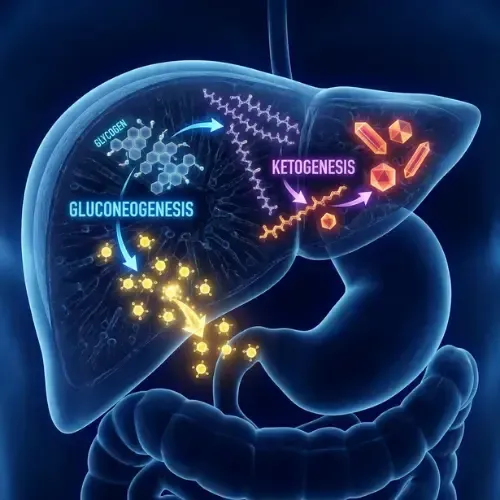
Glucagon Benefits for Fat Loss
Every conversation about blood sugar and fat loss focuses on insulin. But insulin has a counterpart that does the opposite job — and understanding it may be more important.

Non-Alcoholic Fatty Liver Disease
You don't drink. You're not overweight. You eat reasonably well. And your doctor just told you that your liver is showing signs of fat accumulation.
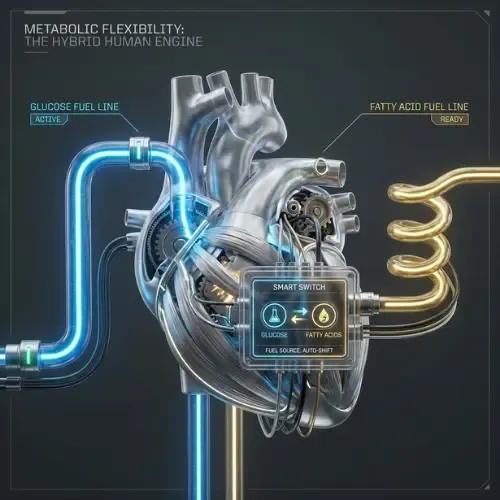
Improve Metabolic Flexibility
Metabolic flexibility is the ability to switch efficiently between burning glucose and burning fat depending on what fuel is available. Most people have lost it.

John Shaw
MAP30 Challenge
John Shaw is a Certified Nutrition Educator and the founder of the MAP30 Challenge. What began as a personal health journey at 294 pounds, and pre-diabetic, evolved into a structured 30-day metabolic reset program grounded in nutritional science. John's mission is simple: give people the biological education that the diet industry never did.

FAQ's
1. What is prediabetes?
Prediabetes is diagnosed when fasting blood glucose falls between 100 and 125 mg/dL, or HbA1c between 5.7% and 6.4%. It indicates that insulin resistance is established and the pancreas is beginning to lose its ability to fully compensate. By the time fasting glucose crosses 100, insulin resistance has typically been present for a decade or more. Prediabetes affects 96 million American adults — and 80% are unaware they have it.
2. What are the symptoms of prediabetes?
Prediabetes typically produces no obvious symptoms — which is why most cases go undetected. The signals that often precede diagnosis include fatigue after meals, afternoon brain fog, persistent carbohydrate cravings, abdominal weight gain, poor sleep quality, and fasting triglycerides above 150 mg/dL. None of these individually confirms prediabetes, but several together — alongside high-normal fasting glucose — warrant further metabolic testing including fasting insulin.
3. Can prediabetes be reversed?
Yes — and this is the most important clinical fact about prediabetes. The Diabetes Prevention Program demonstrated that intensive lifestyle intervention reduced progression to type 2 diabetes by 58% over three years, outperforming metformin. At the prediabetes stage, pancreatic beta cells are still functional and insulin resistance has not yet produced irreversible damage. Full reversal — returning fasting glucose and HOMA-IR to normal ranges — is achievable for most people through dietary change, fasting protocols, improved sleep, and resistance exercise.
4. What is the difference between prediabetes and type 2 diabetes?
Prediabetes is the stage at which insulin resistance is established but the pancreas is still compensating — full reversal without medication is most achievable here. Type 2 diabetes is diagnosed when fasting glucose exceeds 126 mg/dL or HbA1c exceeds 6.5% — indicating that beta cell compensation has significantly declined and glucose can no longer be maintained in the normal range.
5. What causes prediabetes?
The primary driver is chronic insulin resistance — produced by years of dietary patterns that keep insulin persistently elevated. Refined carbohydrates and added sugars produce the sharp, frequent insulin spikes that progressively desensitize cells. Visceral fat accumulation drives hepatic insulin resistance through inflammatory cytokine secretion. Chronic sleep restriction and psychological stress independently elevate cortisol, which worsens insulin signaling. These drivers are typically all present simultaneously and compound each other.
6. What should I do if I'm diagnosed with prediabetes?
Six evidence-supported interventions in order of impact: remove refined carbohydrates and added sugars; get fasting insulin tested to calculate HOMA-IR; extend the overnight fasting window to 13 to 14 hours; prioritize protein at every meal; protect sleep quality and duration; and add resistance exercise twice per week. These address prediabetes through the same biological mechanisms that caused it — applied in the opposite direction — and produce measurable improvements in fasting insulin and glucose within two to four weeks of consistent application.
Sources
CDC — National Diabetes Statistics Report (2024) — https://www.cdc.gov/diabetes/data/statistics-report/index.html
Diabetes Prevention Program Research Group — 'Reduction in the Incidence of Type 2 Diabetes with Lifestyle Intervention or Metformin' (NEJM, 2002) — https://pubmed.ncbi.nlm.nih.gov/11832527/
Tabák AG et al. — 'Prediabetes: a high-risk state for diabetes development' (Lancet, 2012) — https://pubmed.ncbi.nlm.nih.gov/22541686/
Taylor R — 'Type 2 Diabetes: Etiology and Reversibility' (Diabetes Care, 2013) — https://pubmed.ncbi.nlm.nih.gov/23520284/
Araújo J et al. — 'Prevalence of Optimal Metabolic Health in American Adults' (Metabolic Syndrome and Related Disorders, 2019) — https://pubmed.ncbi.nlm.nih.gov/30484738/

Let Me See The Ai Audit Report
I had the MAP30 course material audited and graded by 4 dirrerent Ai models. I was shocked by the grade. See what they had to say about the MAP30 course.

Jaabsha Marketing LLC | All rights reserved 2024 Terms Of Service