12 April, 2026
Edition: Weight Loss & Fat Burning
Vol 1, Edition 28
Why Protein Is the Most Important Macronutrient for Fat Loss — And How Much You Actually Need
Of the three macronutrients, protein is the one that most directly supports fat loss, preserves lean mass, and keeps hunger manageable. But most people eat far too little of it — while obsessing over the ones that matter far less. Here's what the research actually says.

Published By: MAP30 Challenge | Authored By: John Shaw
Article Directory: https://map30challenge.com/article-directory
For the past fifty years, dietary advice has been organized around fat and carbohydrates. Low-fat was the dominant paradigm for three decades — vilifying dietary fat while refined carbohydrates quietly replaced it in virtually every processed food on the market. Low-carb and keto followed, putting fat back on the table and targeting carbohydrates as the primary driver of metabolic dysfunction. As a certified nutrition educator who has lived both sides of this argument, I believe there is merit in both frameworks — and I believe both are incomplete.
The macronutrient that received the least attention in either framework — and that has the clearest, most consistent evidence base for fat loss, metabolic health, and lean mass preservation — is protein. Not because it is exotic or requires specialized knowledge to use, but because adequate protein intake is unglamorous. It does not lend itself to a compelling dietary identity. You cannot name a lifestyle after it. And yet the research on protein's role in fat loss and metabolic function is more robust and more consistent than the research behind almost any other nutritional intervention.
Most people eating in a way they consider high-protein are eating approximately 60 to 80 grams per day. That is enough to avoid deficiency. It is not enough to support active fat loss, preserve lean mass during a caloric deficit, or produce the satiety and hormonal effects that make a dietary change sustainable over weeks and months. What I teach in the MAP30 program is around 30 to 40 grams per meal — especially if you are eating three meals per day. The gap between what most people eat and what actually changes outcomes is what this article addresses.
"Protein is not a supplement to a fat loss strategy. For most people, it is the fat loss strategy — and every other dietary change they are making is working against them because they are not eating enough of it."
Why Protein Behaves Differently From Fat and Carbohydrates
Understanding how the three macronutrients behave differently was the clearest "aha" moment I had when I started studying nutrition seriously. Once I understood this, the entire low-fat vs low-carb debate started to make more sense — and so did why neither side fully solved the problem.
Carbohydrates are broken down into glucose. Glucose raises blood sugar, triggers insulin, and — when insulin is chronically elevated — promotes fat storage and blocks fat burning. The type and speed of carbohydrate absorption determines the magnitude of the insulin response. Refined carbohydrates produce large, fast spikes. Fiber-rich whole food carbohydrates produce slower, more moderate responses.
Dietary fat was the one that surprised me most. While studying the history behind the Food Pyramid, I discovered something that changed how I looked at food entirely: dietary fat has virtually no direct effect on insulin. Fat does not raise blood sugar. It does not trigger an insulin response. It is absorbed directly into the lymphatic system and provides a slow, stable energy source. The old fear of dietary fat — based largely on flawed epidemiology from the 1970s — has no mechanistic basis. Fat does not make you fat. Insulin makes you fat. And fat barely touches insulin.
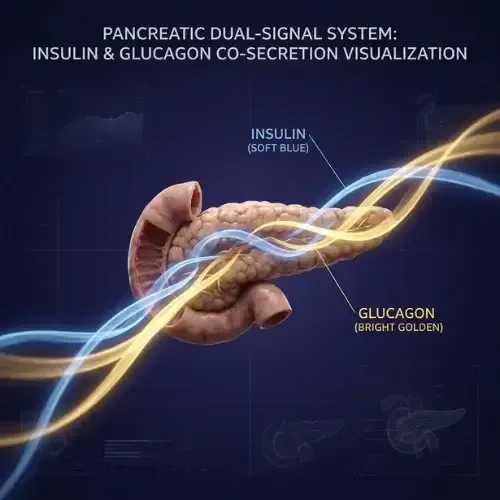
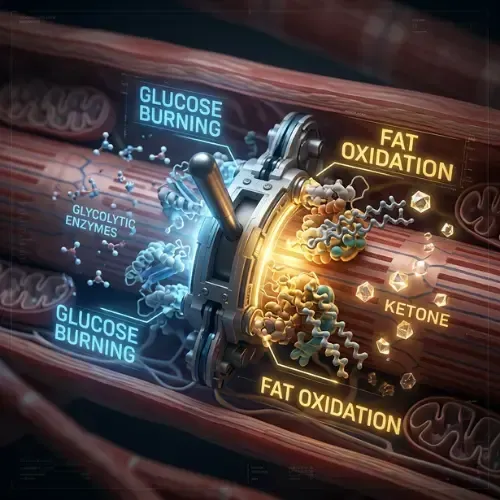
Protein occupies a unique and important middle position — and when you look at it through the lens of the glycemic index, you start to understand why. Protein does stimulate some insulin release, but it simultaneously stimulates glucagon, the insulin-opposing hormone that promotes fat mobilization. As covered in the Glucagon article in this library, the ratio of insulin to glucagon is what determines the metabolic state. After a high-protein meal, that ratio is substantially lower than after a high-carbohydrate meal — meaning the body remains closer to fat-burning mode even while insulin is present.
How the Three Macronutrients Affect Insulin, Glucagon, and Fat Burning
How the Three Macronutrients Affect Insulin, Glucagon, and Fat Burning
The hormonal response — not the calorie count — is what determines whether a food promotes fat storage or fat burning
🍞 Carbohydrates
Especially refined carbs & sugar
Insulin response
Large and rapid — especially from refined sources. Directly locks fat cells in storage mode.
Glucagon response
Suppressed. Insulin elevation directly inhibits glucagon release from alpha cells.
Fat burning
Blocked while insulin is elevated. Cannot access stored fat as fuel.
Satiety
Short-lived — blood sugar crash 1–2 hours later drives hunger and cravings urgently.
Thermic effect
6–8% of calories used in digestion.
🥑 Dietary Fat
Meat, eggs, olive oil, nuts, dairy
Insulin response
Minimal. Fat does not raise blood sugar and produces almost no insulin response.
Glucagon response
Neutral — neither suppresses nor significantly stimulates glucagon release.
Fat burning
Allows fat burning to continue — low insulin means fat cells stay unlocked.
Satiety
Moderate — slows gastric emptying and reduces meal-to-meal glucose variability.
Thermic effect
2–3% of calories used in digestion — the lowest of the three macronutrients.
🥩 Protein
Meat, eggs, fish, dairy
Insulin response
Moderate — stimulates insulin but also glucagon, keeping the ratio favorable for fat burning.
Glucagon response
Significant — amino acids directly stimulate alpha cells. The key advantage over carbs.
Fat burning
Supported — the lower insulin-to-glucagon ratio after protein keeps fat burning closer to active.
Satiety
Highest of the three — longest-lasting ghrelin suppression, strongest satiety hormone release.
Thermic effect
25–30% of calories used in digestion — three to five times higher than carbs or fat.
Protein and Satiety — Why It Is the Most Filling Macronutrient
When I was working to bring my own weight down, one of the first things I had to unlearn was the idea that eating less was the primary lever. It isn't. What you eat determines how you feel two hours after the meal — and that feeling is what determines whether you stay on track or fall off it. The secret, if you want to call it that, is not eating less. It is eating more protein.
The feeling of being satisfied after a meal is not willpower. It is biology — specifically hormonal biology. Here is why protein is the most effective tool for reversing the hunger cycle that most people are trapped in:
1. The Hormonal Fullness Signal
Protein is the most powerful trigger for your body's natural appetite suppressants. When you eat a protein-rich meal, your gut releases three specific hormones — GLP-1, PYY, and CCK. These send a direct message to your brain to stop looking for food. Unlike carbohydrates, which can leave you hungry again within the hour, protein creates a hormonal signal that genuinely turns off hunger.
2. Silencing the Hunger Hormone
Ghrelin is the hormone that makes your stomach growl and tells your brain you need to eat. Protein suppresses ghrelin longer and more effectively than any other macronutrient. Think about how long you feel satisfied after a steak or a few eggs versus a bagel or a bowl of cereal. That difference is not a lack of willpower on the bagel days. That is ghrelin biology. The protein kept your hunger signal low. The refined carbohydrates brought it back fast.
3. The Metabolic Tax — The 30% Advantage
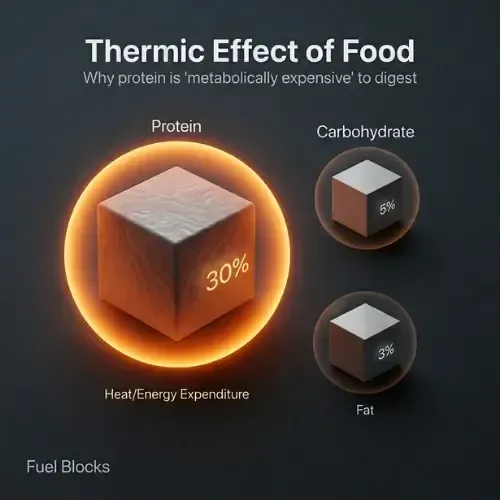
One of the most useful things I discovered when I started studying protein seriously: your body actually burns a significant amount of energy just processing it. This is called the thermic effect of food. Protein is chemically complex, so your body charges a metabolic tax to digest it — approximately 25 to 30% of its calories. Carbohydrates cost only 6 to 8%. Fat costs only 2 to 3%. That means a 400-calorie protein meal effectively delivers around 300 net calories. You are boosting your metabolic rate just by choosing what is on your plate.
A randomized crossover study found that increasing dietary protein from 15% to 30% of calories, without any other dietary change, produced a spontaneous reduction in daily caloric intake of approximately 441 calories per day — driven entirely by improved satiety and reduced hunger, without any deliberate caloric restriction. (Weigle DS et al. — American Journal of Clinical Nutrition, 2005)
Protein and Lean Mass — The Variable That Determines Long-Term Success
Fat loss and weight loss are not the same thing — and understanding the difference changed how I approached every dietary decision I made after learning it. Weight loss reflects changes in fat, muscle, water, and bone mineral combined. Fat loss specifically means reduction in adipose tissue. The difference matters enormously for long-term metabolic health because lean mass — muscle — is the primary site of glucose disposal in the body and the primary driver of resting metabolic rate.
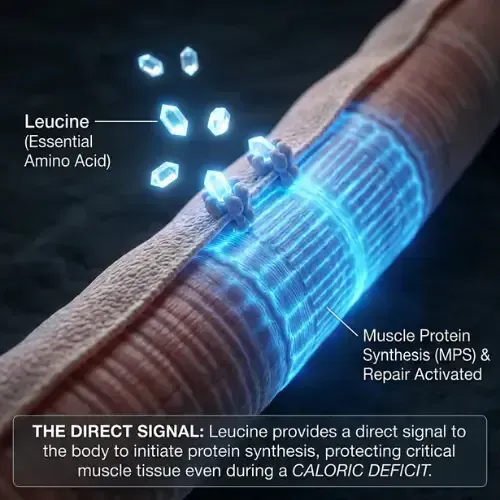
Think of amino acids as Lego blocks. Your body connects them in different combinations to build muscles, organs, skin, enzymes, hormones, and antibodies. Your body can manufacture some amino acids on its own — but nine of them, the essential amino acids, it cannot make. They must come from food. When protein intake falls below what the body needs, it does not stop requiring those amino acids. It gets them from the next most available source: your skeletal muscle. The process is called muscle catabolism. It is not theoretical. It happens every time protein intake is chronically insufficient during a caloric deficit.
When people lose weight through calorie restriction alone, studies consistently show that 20 to 40% of what they lose is lean mass — not fat — when protein intake is inadequate. Losing lean mass reduces resting metabolic rate, meaning the body burns fewer calories at rest after the diet than before it. This is the primary mechanism behind the weight regain that follows most conventional dieting: the lower metabolic rate makes maintaining the reduced weight progressively harder. And beyond metabolism, losing muscle structure affects stability, balance, and longevity in ways that become more consequential with every decade of age.
A meta-analysis of 87 randomized trials found that higher protein intakes were associated with significantly greater preservation of lean body mass during weight loss — with the effect becoming more pronounced as protein intake increased above 1.2 grams per kilogram of body weight per day. (Helms ER et al. — International Journal of Sport Nutrition, 2014)
25–30%
of protein's calories are used in its own digestion — the thermic effect. Carbohydrates use 6–8%. Fat uses 2–3%.
Halton TL, Hu FB — Journal of the American College of Nutrition, 2004
How Many Grams of Protein Do You Actually Need
The Recommended Dietary Allowance for protein — 0.8 grams per kilogram of body weight per day — is the minimum required to prevent deficiency in sedentary adults. It is not the amount required to support fat loss, preserve lean mass, or produce the satiety effects that make a dietary change sustainable. There is a significant gap between those two numbers, and most dietary protein advice lands in the middle — adequate for health maintenance, insufficient for active metabolic improvement.
The research on protein intake for fat loss and lean mass preservation consistently points to a target range of 1.6 to 2.2 grams per kilogram of body weight per day — roughly double the RDA. The practical translation: 30 to 40 grams of protein per meal for most adults. A simple visualization I use in the MAP30 training — a palm-sized serving of protein at every meal. Your palm, not someone else's. It scales to your body size automatically.
Aim for 30 grams at breakfast, 30 to 40 at lunch, and 30 to 40 at dinner. That delivers 90 to 110 grams daily — well within the evidence-supported range. Protein synthesis in muscle is optimized by distributing intake across meals rather than concentrating it in one or two large servings. The protein sources that work best in the MAP30 framework:
Eggs — 6–7g per egg, complete amino acid profile, minimal insulin impact
Fatty cuts of meat (beef, pork, lamb) — 25–35g per 4oz serving, zero carbohydrate
Chicken and turkey — 25–30g per 4oz, versatile and accessible
Full-fat Greek yogurt (plain) — 15–20g per cup, low carbohydrate when unsweetened
Cottage cheese — 25g per cup, slow-digesting casein protein
Sardines — 25g per can, highly affordable and rich in omega-3s
A note on plant proteins — this question comes up often, and I want to address it honestly. I experimented with a vegetarian diet myself about two decades ago, and one of the things I kept running into was how much harder it was to feel satisfied and hit protein targets. The reason is amino acid completeness. Animal proteins contain all nine essential amino acids in the proportions the body needs. Most plant proteins are incomplete — missing or low in one or more essential amino acids. You can address this through intentional combining (rice and beans, for example), but that typically means higher carbohydrate intake alongside the protein. For people whose primary goal is metabolic health and fat loss, whole food animal proteins are the most efficient path to hitting protein targets without the glycemic load that most plant protein sources carry.
How Much Protein Is Too Much — And Who Should Actually Be Careful
The concern about excessive protein — particularly the idea that high protein intake damages kidneys — is one of the most persistent myths in nutrition. Like most persistent myths, it contains a kernel of truth that has been broadly and incorrectly applied.
The kernel: people with pre-existing chronic kidney disease do need to limit protein intake, because impaired kidneys struggle to process the nitrogen waste products of protein metabolism. That is a real clinical consideration for a specific population. The misapplication is extending that concern to healthy adults with normal kidney function, for whom the evidence consistently shows no harm from protein intakes up to 2.5 grams per kilogram of body weight per day — substantially above the evidence-supported target for fat loss. For healthy adults eating in the 1.6 to 2.2 gram range, there is no credible safety concern. The risk of eating too little protein during fat loss — lean mass loss, metabolic rate reduction, impaired satiety — substantially outweighs any risk from eating within that range.
What Happens When You Increase Protein Intake
The changes that follow a meaningful increase in dietary protein — from the typical 60 to 80 grams per day to the 100 to 130 gram range — are predictable and typically become noticeable within one to two weeks. I know this from my own experience, and I have seen it consistently in the people who go through MAP30. The changes build on each other in a sequence that most people do not expect.
Hunger decreases first — not modestly, but substantially. The combination of ghrelin suppression, elevated satiety hormones, and the slower gastric emptying that protein produces means that meals feel more satisfying and the urgency of hunger between them diminishes. This is the change most people feel first and feel most viscerally. And because hunger is the thing that derails most dietary efforts, solving it changes the entire experience of trying to eat better. For the first time, the effort feels manageable rather than like a constant battle.
With hunger quieter, cravings for refined carbohydrates weaken next. This is partly hormonal — improved satiety signaling reduces the dopamine-glucose craving loop — and partly practical. When a meal delivers adequate protein, the post-meal blood sugar crash that drives carbohydrate cravings is significantly blunted. The refined carbohydrate craving is often the body asking for a quick glucose hit to correct a crash that a proper protein intake would have prevented. Fix the protein, and the craving often disappears on its own.
Body composition then begins shifting even without deliberate caloric restriction. Higher protein intake increases the thermic effect of the diet, preserves lean mass, and reduces spontaneous caloric intake through improved satiety. In multiple studies, participants who increased protein without any instruction to reduce calories spontaneously ate less — because they were genuinely less hungry. The caloric deficit created itself. That is exactly what I experienced, and it is what the MAP30 protocol is designed around: create the right hormonal environment and the body does most of the work.
This article is part of our Weight Loss & Fat Burning series. Weight Loss & Fat Burning
Latest Articles
Intermittent Fasting Help With Insulin Resistance
Intermittent fasting is the most talked-about dietary intervention of the past decade. But most of the conversation focuses on weight loss.
How Insulin Controls Blood Sugar
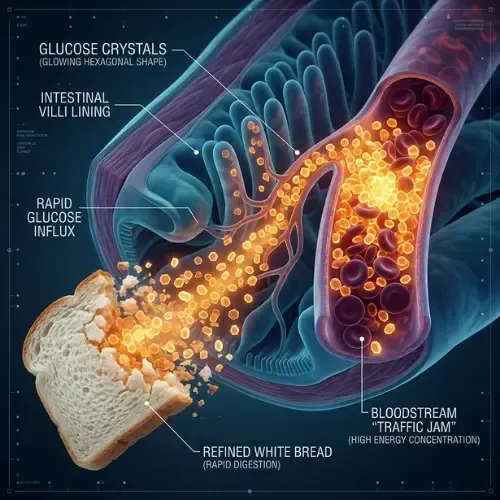
You eat two slices of white bread with lunch. You didn't add sugar to anything. But in the next 45 minutes, your blood sugar will spike higher.
Is Sleep Slowing Your Metabolism
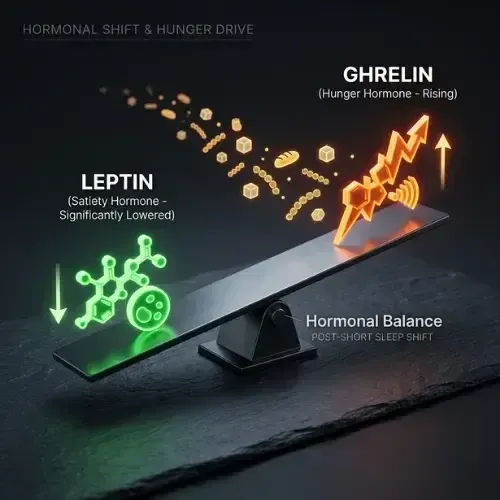
You're doing everything right — eating well, staying active, managing stress as best you can. And yet the scale won't move, your energy is flat.

John Shaw
MAP30 Challenge
John Shaw is a Certified Nutrition Educator and the founder of the MAP30 Challenge. What began as a personal health journey at 294 pounds, and pre-diabetic, evolved into a structured 30-day metabolic reset program grounded in nutritional science. John's mission is simple: give people the biological education that the diet industry never did.
FAQ's
1. What should you eat for protein and weight loss?
The most effective protein sources for fat loss are whole food proteins with minimal processing and low glycemic impact: eggs, fatty cuts of meat, chicken, salmon and fatty fish, full-fat plain Greek yogurt, cottage cheese, and sardines. These deliver 25 to 35 grams of protein per serving without the added sugars and refined carbohydrates found in many packaged high-protein products. Distributing 30 to 40 grams across three meals optimizes both satiety and lean mass preservation.
2. Why is protein the most important macronutrient for fat loss?
Protein is uniquely effective for fat loss through four simultaneous mechanisms: it produces the highest satiety per calorie through hormonal signaling; it preserves lean mass during caloric deficits, protecting resting metabolic rate; it has the highest thermic effect — 25 to 30% of its calories are used in its own digestion; and it stimulates glucagon alongside insulin, producing a lower insulin-to-glucagon ratio than carbohydrate meals, keeping the body closer to fat-burning mode after eating.
3. How many grams of protein do you need per day for weight loss?
The evidence-supported range is 1.6 to 2.2 grams per kilogram of body weight per day — roughly double the RDA. For practical purposes, 30 to 40 grams per meal across three meals delivers 90 to 120 grams daily for most adults. A palm-sized serving of protein at each meal is the practical visualization that scales to body size automatically.
4. How to hit 150g of protein a day?
Structure it across three meals: breakfast with 3 to 4 eggs plus Greek yogurt delivers 35 to 40 grams; a 6oz chicken breast or ground beef at lunch delivers 40 to 45 grams; salmon or a larger cut of meat at dinner delivers 35 to 45 grams. That reaches 110 to 130 grams without supplements. A fourth small protein-forward snack — cottage cheese, sardines, or hard-boiled eggs — closes the gap to 150 grams.
5. How much protein is too much?
For healthy adults without pre-existing kidney disease, protein intakes up to 2.5 grams per kilogram of body weight per day are consistently shown to be safe. The kidney concern applies specifically to people with existing chronic kidney disease — not healthy adults. The risk of eating too little protein during fat loss — lean mass loss, metabolic rate reduction, reduced satiety — substantially outweighs any risk from eating within the evidence-supported range.
6. Does protein affect insulin?
Yes — but differently from carbohydrates. Protein stimulates some insulin release but simultaneously stimulates glucagon. The resulting insulin-to-glucagon ratio after a protein-rich meal is substantially lower than after a carbohydrate-equivalent meal — keeping the body closer to fat-burning mode. This is in contrast to refined carbohydrates, which produce a large insulin spike with minimal glucagon response, locking fat cells in storage mode.
Sources
Weigle DS et al. — 'A high-protein diet induces sustained reductions in appetite' (Am J Clin Nutr, 2005) — https://pubmed.ncbi.nlm.nih.gov/16002798/
Helms ER et al. — 'A systematic review of dietary protein during caloric restriction' (Int J Sport Nutr, 2014) — https://pubmed.ncbi.nlm.nih.gov/24092765/
Halton TL, Hu FB — 'The effects of high protein diets on thermogenesis, satiety and weight loss' (J Am Coll Nutr, 2004) — https://pubmed.ncbi.nlm.nih.gov/15466943/
Leidy HJ et al. — 'The role of protein in weight loss and maintenance' (Am J Clin Nutr, 2015) — https://pubmed.ncbi.nlm.nih.gov/25926512/
Morton RW et al. — 'A systematic review, meta-analysis of protein supplementation on resistance training gains' (Br J Sports Med, 2018) — https://pubmed.ncbi.nlm.nih.gov/28698222/

Let Me See The Ai Audit Report
I had the MAP30 course material audited and graded by 4 dirrerent Ai models. I was shocked by the grade. See what they had to say about the MAP30 course.

Jaabsha Marketing LLC | All rights reserved 2024 Terms Of Service